Rota Vicentina
Walking the Fisherman’s Trail from Aljezur.
Aljezur is a stop on the Fisherman’s Trail. The waymarked route comes in from Odeceixe in the north and leaves again towards Arrifana in the south, and our homes are in the old town a few minutes from where it passes. If you are walking the trail, you walk past our door.
Below is the trail itself, and the two stages that meet here.
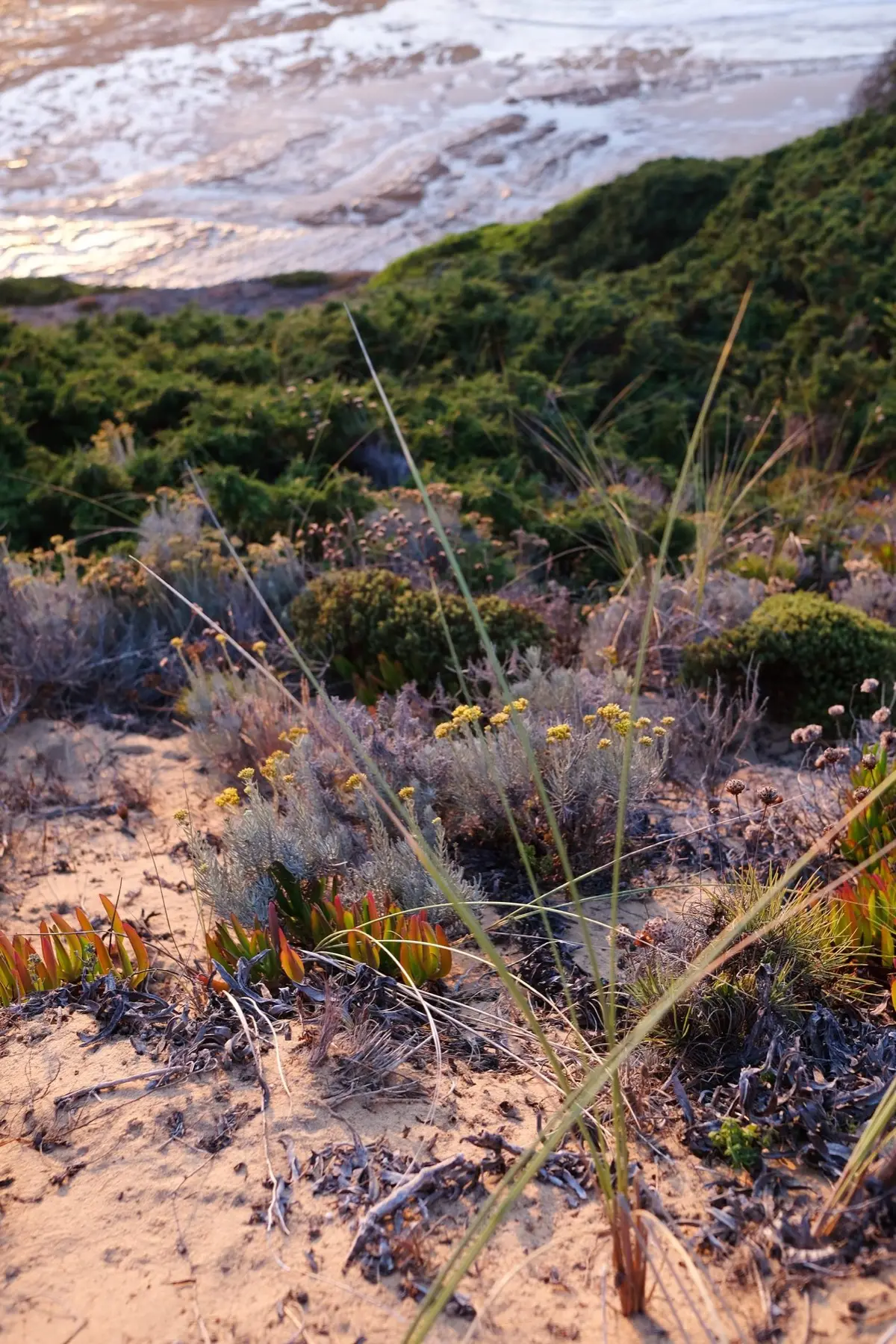
The Fisherman’s Trail
What it is.
The Trilho dos Pescadores is the coastal half of the Rota Vicentina, a waymarked long-distance path along the southwest edge of Portugal. It runs from Porto Covo in the Alentejo down to Lagos in the Algarve, roughly 226 kilometres in thirteen stages, on the paths the fishermen used to reach the rocks they fish from.
It is not a mountain route. There is very little climbing, and almost no shade. What makes it hard is the surface: long sections of soft sand, cliff edge for hours at a time, and an afternoon wind off the Atlantic that blows most days in summer. Most people walk it in spring or autumn and find the summer version unpleasant rather than difficult.
The path is waymarked in blue and green, and it stays close enough to the cliff that you rarely need a map to know you are on it. Between the stage towns there is nowhere to buy water, so what you carry is what you have.
- Porto Covo to Lagos, about 226 km in thirteen stages
- Waymarked in blue and green, walked north to south by most people
- March to May and September to November are the seasons for it
- Stages run 11 to 25 km, so most days are five to seven hours
- Soft sand, cliff edge, no shade and no water between towns
- Wild camping is not allowed inside the nature park
- Distances and stage splits: check rotavicentina.com, they are the ones who maintain it
Aljezur
The two stages that meet here.
Aljezur is the end of one stage and the start of the next. Distances below follow the official Rota Vicentina figures, times are ours.
Odeceixe to Aljezur
- 23 km · 6–7 h
- Ends here
- Fields and heath
- Split route
South over the Seixe river, which is the border with the Alentejo, then irrigated fields, coastal heath and the cliffs above Amoreira. Partway along, the route splits: the inland line is shorter, the coastal line is longer and is the one people remember. It finishes in Aljezur.
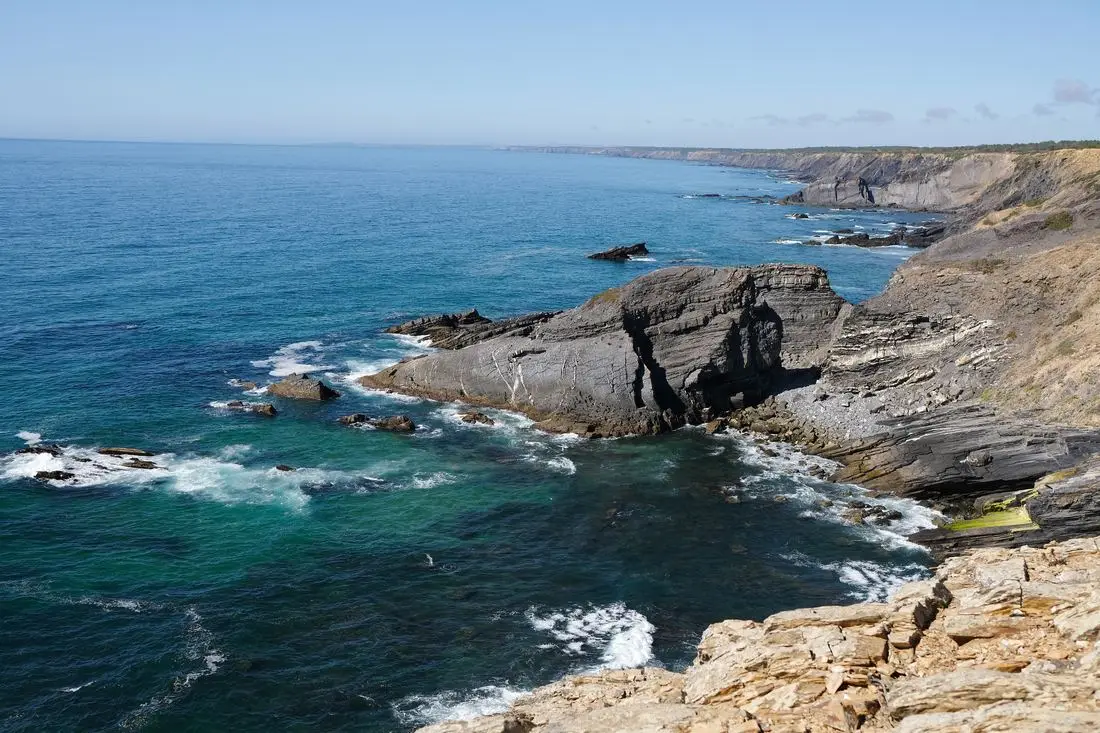
Aljezur to Arrifana
- 17 km · 5 h
- Starts here
- Monte Clérigo
- Pine at the end
Up past the castle, out through the valley, across the plateau to Monte Clérigo and then south along the cliff into Arrifana, where the ruins of a twelfth-century ribat sit above the bay. The last few kilometres are a sandy path through pine.
stage-arrifana.jpg — the track out of the valley towards Monte Clérigo
Arrifana to Carrapateira
- 20 km · 6–7 h
- Tide dependent
- No water
- Deep sand
The next one south, and the one people rate highest. Parts of it are only passable at low tide, and when they are not, the Historical Way inland is the alternative. No shade, nowhere to fill a bottle, deep sand in places. Start early.
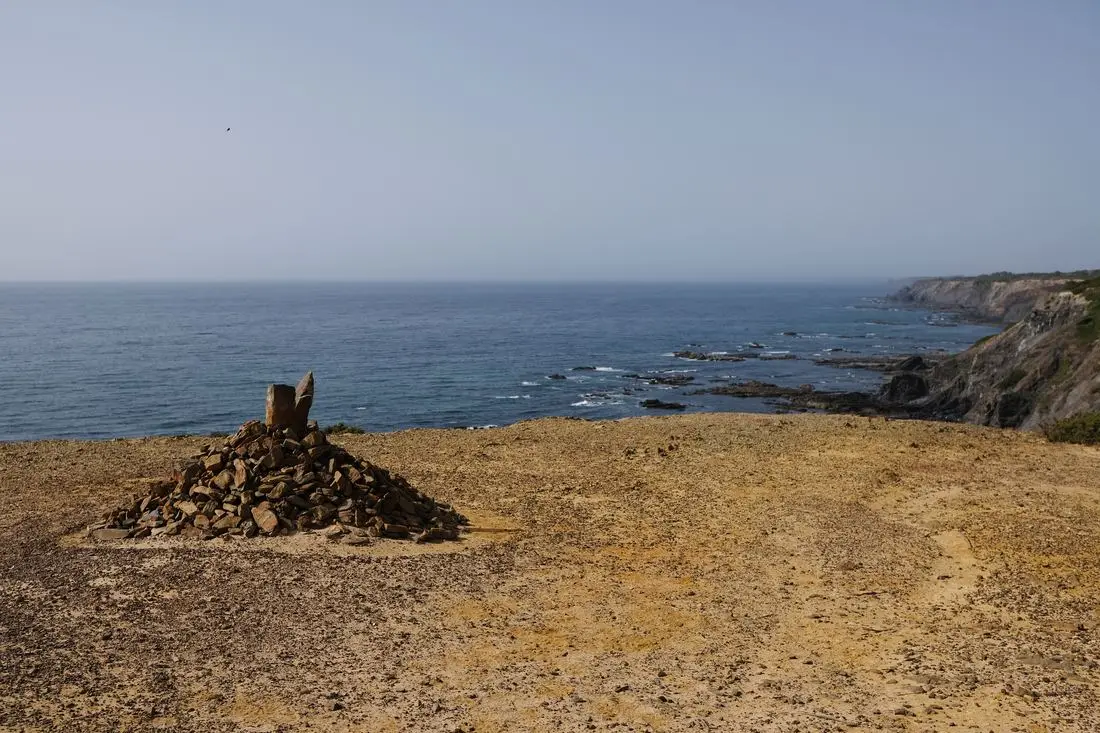
Historical Way, Aljezur to Marmelete
- 22 km · 6 h
- Inland
- Shade
- For windy days
The Rota Vicentina has a second route inland, the Caminho Histórico, and Aljezur sits on that as well. Cork oak, eucalyptus and old farm tracks, and the sensible choice on a day the coast is blowing thirty knots.
stage-marmelete.jpg — cork oaks and farm track inland
The circuit from the back door
- 5 km · 1.5 h
- No car
- Rest day
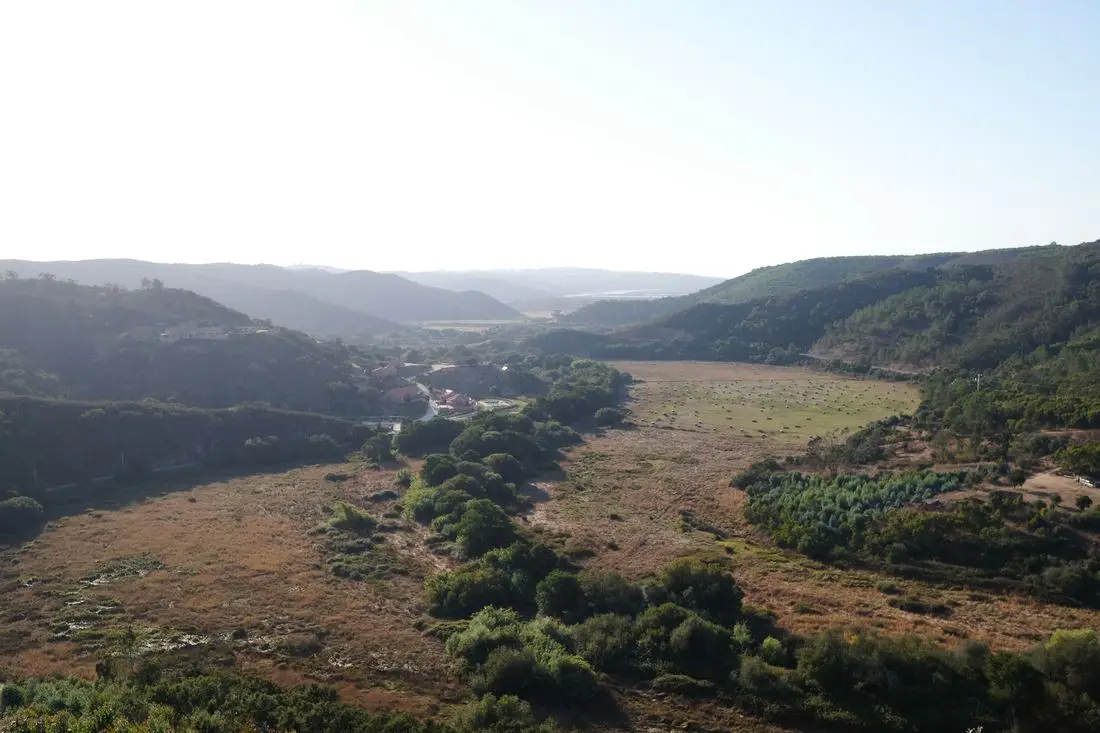
Not part of the trail. Down the hillside, through the trees, up to the castle and home, for the day your legs have had enough.
- Unpack once, or move on the next morning. Both work from here
- A washing machine, so two sets of clothes are enough
- Somewhere covered and warm to dry boots and a jacket overnight
- A kitchen, so you eat when you get in rather than when a restaurant opens
- Pasta, sauce, coffee, tea and spices already in the cupboard
- Radiators in every room and the pellet stove alight, because the walking season is October to May
- Underfloor heating in the bathroom for the morning after a long day
- A lockbox, so arriving at nine at night is nobody’s problem
- The Vamus bus and four taxi numbers, for getting to a stage start
How it works
Ask us anything about the route.
We have walked every stage between Odeceixe and Carrapateira. If you want to know when the bus goes, where the tide decides the route, or whether a section is worth it in a strong wind, write and we will tell you, whether or not you are staying with us.
There is no charge and no package attached to it.
Most walkers move on every morning, and for most routes that is the right way to do the trail. We are one of the beds in Aljezur, on the night the trail brings you here.
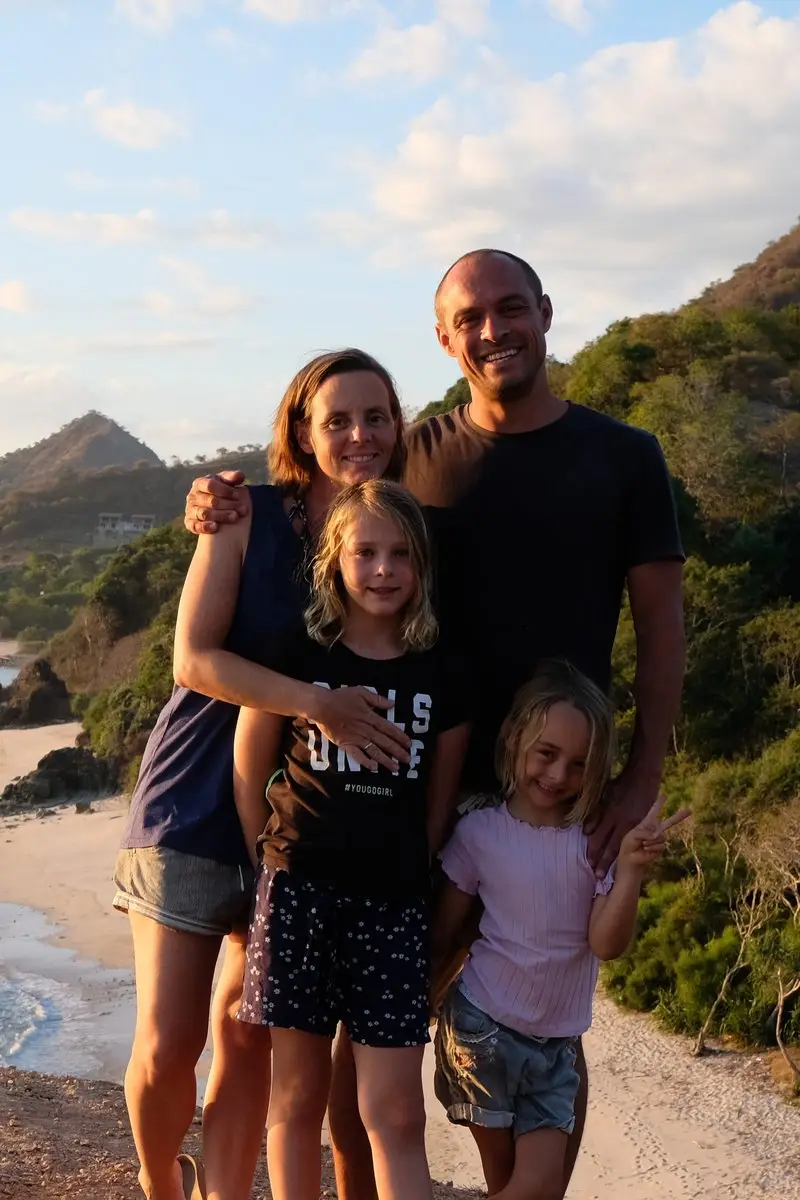
Sabrina & Andreas
We answer within the hour
Walking season
October to May is the walking season.
Cooler walking, empty trails, and the houses warm and quiet. Prices are at their lowest in those months.